How Businesses Are Saving Thousands Per Year by Eliminating Processing Fees
Credit card processing fees are one of the most persistent and unavoidable expenses for modern businesses. On average, merchants pay between 2%–4% per card transaction, which can translate into thousands: or even tens of thousands of dollars lost every year. This is often accepted as the “cost of doing business” but not anymore.
Dual pricing is a transparent, compliant pricing model that allows businesses to eliminate or drastically reduce credit card processing fees without increasing their base prices. This guide explains what dual pricing is, how it works, why it is legal, and how businesses use it to protect profit margins.
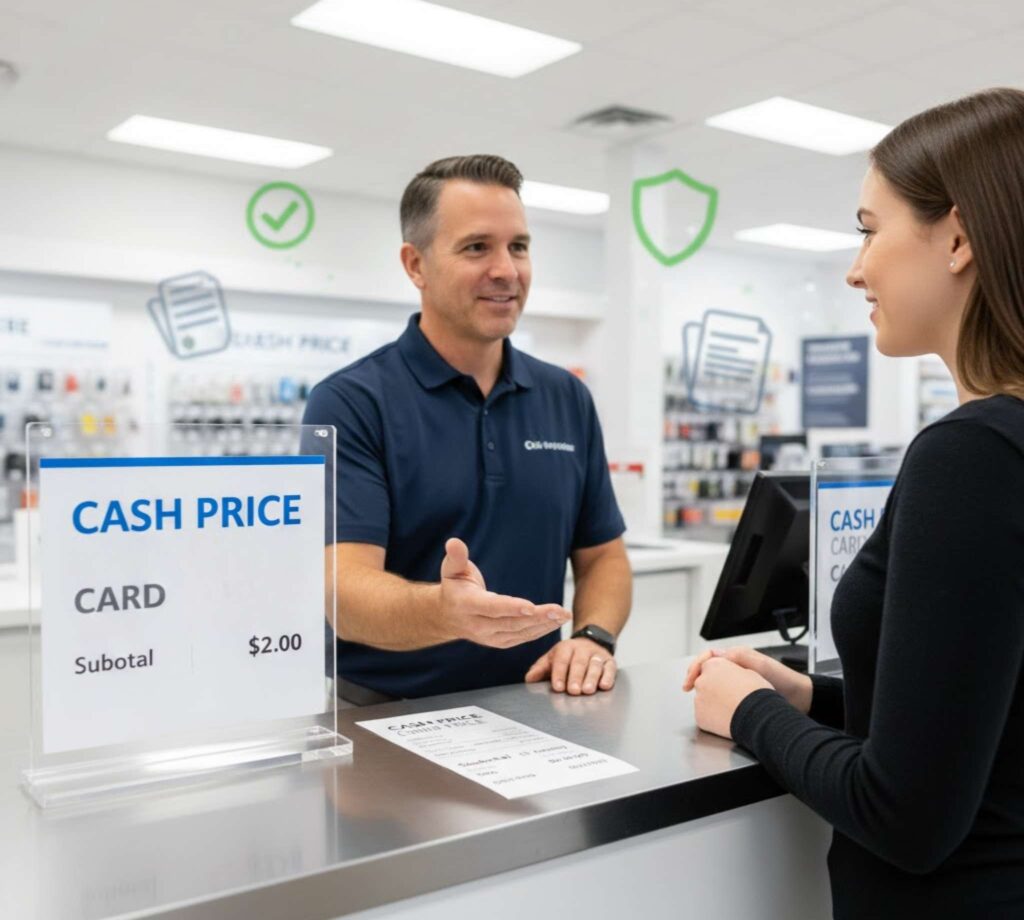
Dual pricing is a pricing strategy where a business displays two prices for the same product or service:
Cash (or non-card) price
Card price
The difference between the two prices reflects the cost of card acceptance. Customers choose their preferred payment method, and the business avoids absorbing processing fees whether the customer chooses card or cash transactions. This is simply the smarter way to do business and was not always an option.
Key principle: The business sets the cash price as the base price. The card price includes the processing cost.
The Pricing Work
How Dual Pricing Works
A business establishes a cash price for its products or services.
Card transactions include a clearly disclosed service cost.
Customers see pricing transparency before completing the transaction.
Cash-paying customers pay the lowest price.
Card-paying customers cover the processing expense.
This approach shifts the burden of card fees away from the merchant while remaining transparent and customer-friendly. The business owner does not have to “pay to play” as they are providing the product/service to the end-customer. The choice is passed to the customer on whether or not they want to use the transaction convenience offered by the big banks and credit card companies or keep it local (cash) between the Merchant and Customer – like it used to be.
Process
Why Businesses Are Adopting Dual Pricing
Eliminates Processing Fees
Instead of paying processing fees out of pocket, businesses pass the convenience cost to card users in a compliant way.
Protects Profit Margins
Rising costs make it harder to maintain margins. Dual pricing ensures profits are not eroded by transaction fees.
Predictable Cash Flow
With fees removed or reduced, businesses experience more consistent monthly revenue.
Customer Transparency
Customers see exactly what they are paying and why, reducing confusion or disputes.
Dual pricing is legal in most U.S. states and complies with card brand regulations when:
Prices are clearly disclosed before payment
Signage is visible at point of entry and point of sale
Receipts clearly reflect pricing
The cash price is the true base price
Dual pricing is not the same as surcharging, which is regulated differently and restricted in some jurisdictions.Proper setup and compliance review are essential before implementation.
Dual pricing is a proven, transparent strategy that allows businesses to take control of processing costs, protect margins, and increase long-term profitability.
When implemented correctly, it offers a compliant alternative to absorbing card fees, helping businesses save thousands of dollars every year.
About CURE-N-C
CURE-N-C helps businesses implement compliant dual pricing solutions, optimize payment systems, and improve operational efficiency through modern technology and automation.